
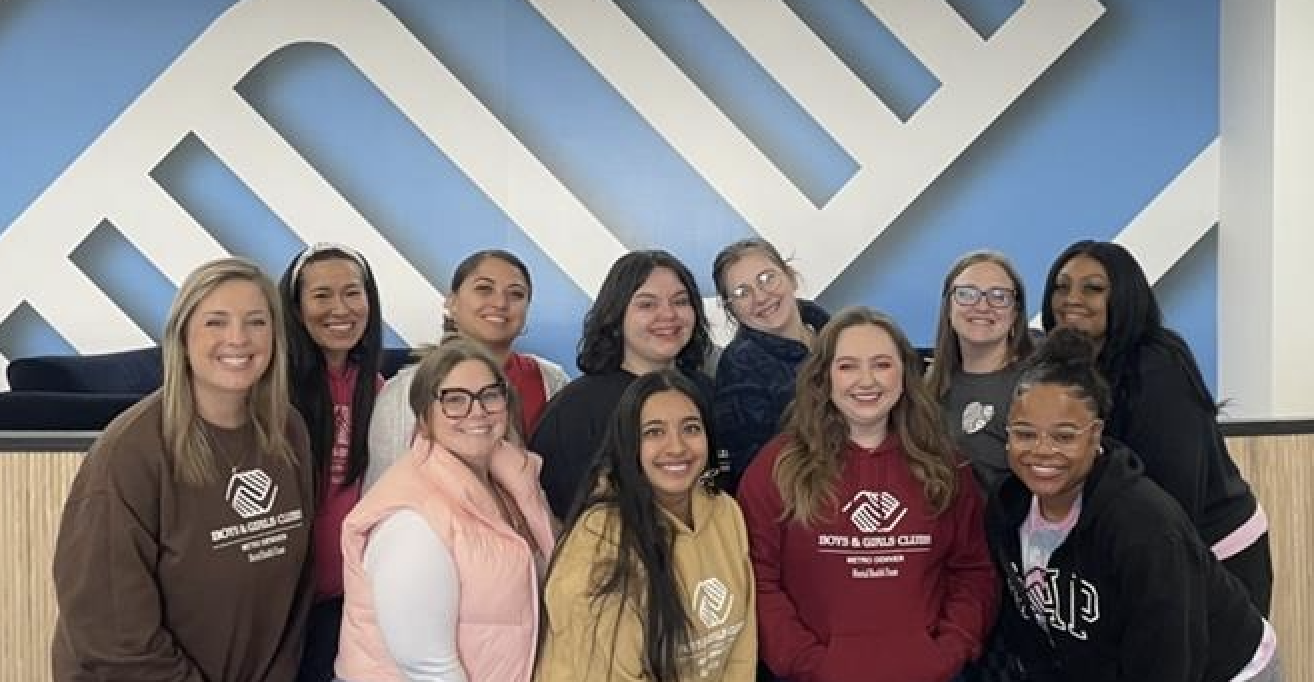
March is Social Work Month—a time set aside since 1963 to recognize the people who quietly, consistently, and powerfully help hold communities together. This year’s theme, “Social Workers: Uplift. Defend. Transform.”, feels especially close to home for us at Boys & Girls Clubs of Metro Denver.
Across our 25 Clubs, youth mental health remains one of our top priorities. Kids today are navigating so much—school lockdowns, social media pressures, and the ripple effects of a global pandemic, to name just a few. More than ever, they need trusted adults who can help them make sense of big emotions, work through tough moments, and feel grounded and supported.
That’s where our mental health team comes in. Using a trauma‑informed approach, they help Club kids build emotional skills, overcome challenges, and connect families with additional resources when life gets complicated. They truly uplift, defend, and transform every single day.

One of the people leading that work is Arya January, our lead social worker. Arya shows up for kids with remarkable empathy and clarity of purpose—driven by her goal to be the caring adult she once needed herself.
The Role of Social Workers at Boys & Girls Clubs of Metro Denver
When you walk into one of our Clubs on a typical afternoon, you’ll see kids shooting hoops, finishing homework, or diving into art projects—but behind all that energy is another constant presence: the quiet, steady support of our mental health professionals. They’re woven into the fabric of each Club, greeting kids by name, checking in when someone’s having a tough day, and guiding small groups through conversations about feelings, friendships, and growing up.
These moments might look simple—a chat at a table, a quick conversation in the hallway—but they’re often the turning points when a young person feels truly seen.
This year brought an exciting new chapter. Our youth mental health team partnered with Grassroot Soccer, a youth organization founded in Africa that uses soccer and connections to teach emotional well‑being. Being one of the first U.S. groups they’ve collaborated with felt like joining a much bigger story—one that stretches across continents.
Together, we shaped their curriculum to fit the unique rhythms of our Clubs. The result? Sessions filled with laughter, movement, and conversations that help kids feel safe naming their emotions and proud of who they’re becoming. The partnership resonated with our Club kids in ways we hoped it would: it honored their diverse identities while giving them fresh tools to build resilience.
And while these structured programs are powerful, emotional growth doesn’t stop when the session ends. Social‑emotional learning is part of everything we do. It shows up when a staff member helps resolve a disagreement on the field, when a shy kid decides to join a new activity, or when someone discovers a strength they didn’t know they had.
Meet Arya January: A Champion for Club Kids

When you meet Arya January, you quickly understand why kids gravitate toward her. She has a way of showing up—calm, steady, and fully present—that makes young people feel seen. Long before joining Boys & Girls Clubs of Metro Denver, Arya spent more than a decade volunteering with a summer camp for children in foster care, an experience that showed her just how powerful one caring adult can be in a kid’s life. “Meaningful relationships are at the heart of healing,” she says, a belief that guides everything she does.
She discovered the Mental Health Professional role at Boys & Girls Clubs of Metro Denver and immediately felt at home. “It sounded like a dream come true,” she recalls. Now, as a Lead Social Worker, Arya supports Club members and staff across multiple sites and oversees the Revitalize, Engage, Navigate, Empathize, Win (RENEW) program offered at Westminster Public Schools. She also received the Premio de Honor a la Práctica Informada sobre Trauma de Clubes de niños y niñas de América in 2023. Serving as a trauma specialist is work that keeps her busy but deeply fulfilled.
One story she carries with her is about a former Club member. When Arya first met her, she struggled with intense anger that often led to physical altercations. “Almost every day, something would happen,” Arya shared. But last summer, everything shifted. During softball season, the Club member found a new outlet.
“It was like a light flipped in her head,” Arya says. Instead of reacting in the moment, she learned to pause—saving her anger for the game, where she could release it in a healthier way. Through their check-ins, the Club member discovered that taking a moment to breathe and think helped her choose different outcomes. The change stuck. Today, the Club member is thriving—not just in sports, but in school and her relationships.
Stories like hers fuel Arya’s work. Her philosophy is simple:
“One caring, consistent relationship can change the trajectory of a young person’s life.”
And each day at the Clubs, she tries to be exactly that— “the adult I needed when I was younger.”
How the Community Can Support Social Workers and Club Kids
If you ask any social worker at our Clubs what truly makes a difference for kids, the answer almost always comes back to relationships. The American Psychological Association puts it simply—strong connections with caring adults are one of the most powerful protectors for a young person’s mental health. As psychologist Lisa Damour says, “A relationship with a great adult is like the fluoride in the water of adolescent mental health care.” It strengthens everything.
And right now, those relationships matter more than ever. Kids are facing bigger mental and emotional challenges. Parents are working hard. Schedules are full. Life is complicated. And in those critical hours when they’re not in school—when kids are exploring, questioning, and figuring out who they are—they need adults who can guide, support, and cheer them on.
At Boys & Girls Clubs of Metro Denver, members find mentors, stability, and a sense of belonging. They find people like Arya—social workers who show up, day after day, ready to help kids grow into themselves.
But this work doesn’t happen alone. It takes a community that believes in kids and the people who support them.
If you want to play a part, there are so many ways to step in—whether by learning more about the work social workers do, sharing our mission with others, or helping ensure every kid has access to a safe, welcoming place when they’re not in school.