
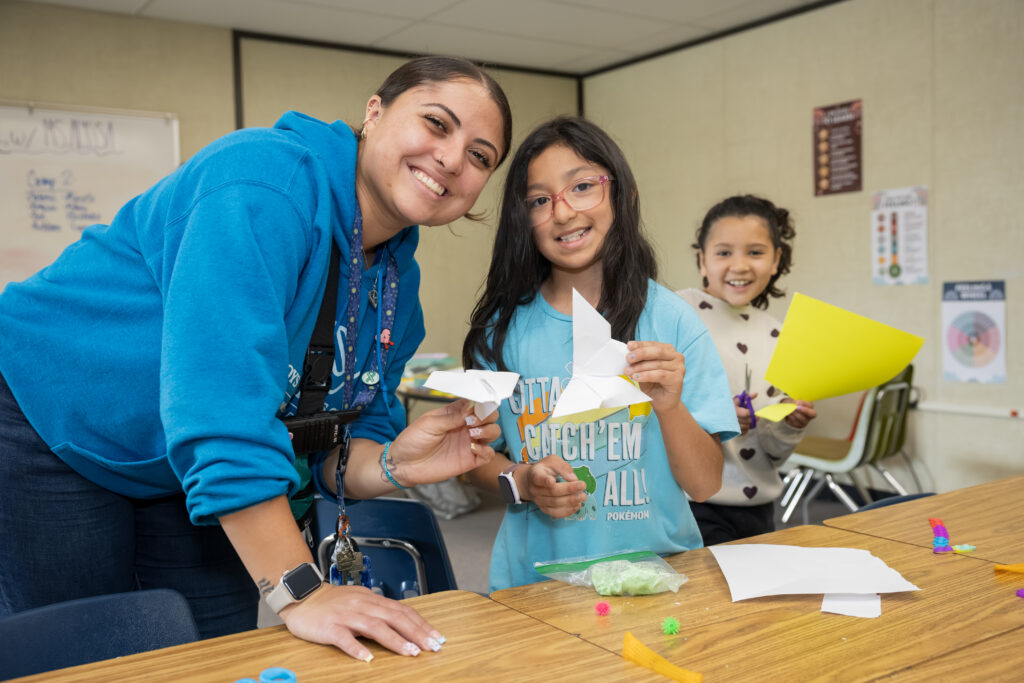
When young people help design programs, the result is often more relevant, engaging, and effective than when adults design programs alone.
That's one of the key lessons from a recently published case study co-authored by members of the Boys & Girls Clubs of Metro Denver Mental Health Team.
Over several years, Club members and Boys & Girls Clubs of Metro Denver mental health professionals partnered with researchers from the University of Colorado Boulder to develop Dentro de U, a free web-based social-emotional learning program inspired by Disney and Pixar's De adentro hacia afuera. The program uses storytelling and interactive activities to help young people understand emotions, build emotional awareness, and strengthen social-emotional skills.
Just as important as the program itself is how it was developed: young people helped shape it from the start.
Why Youth Voice Matters in Program Design
Many youth programs ask participants for feedback after a program has already been created.
InsideU took a different approach.
Using a participatory co-design process, researchers worked alongside Club members throughout development. Young people served as co-designers and testers, while BGCMD's mental health team provided youth development and mental health expertise.
This approach helped ensure the program reflected the real experiences and perspectives of the young people it was designed to serve.
And their feedback directly influenced the final product.
What Young People Taught Researchers
Early in development, researchers believed kids might connect with the idea of emotions as "superpowers."
But when they asked Club members, young people expressed greater interest in stories about using emotions to support friends and navigate real-life situations.
As a result, the program evolved.
Youth input helped shape InsideU's characters, scenarios, language, and interactive features.
"The kids felt their voices being heard and their ideas being put into something they could share with their friends and family," said Julie Arbuckle, Lead Social Worker for Boys & Girls Clubs of Metro Denver and co-author of the case study.
During another phase of the project, Club members explored how emotions feel in the body through colors, shapes, movement, sounds, and creative descriptions. Their ideas helped inspire an interactive feature that allows users to express emotions in similarly imaginative ways.
The result was a social-emotional learning program informed not only by research and professional expertise, but also by the lived experiences of young people.
What This Means for Social-Emotional Learning and the Wellness of Youth
The case study offers valuable insights for researchers, educators, youth development professionals, and organizations working to support the wellbeing of youth.
One key takeaway is that adults cannot always predict what will resonate with young people.
Inviting youth into the design process early can help uncover assumptions, strengthen program quality, and create experiences that feel more meaningful and engaging for participants.
For organizations that serve young people, co-design is more than a research method. It is a way to ensure programs reflect the needs, perspectives, and strengths of the youth they are intended to support.
Designing With Young People, Not Just for Them
At Boys & Girls Clubs of Metro Denver, we believe young people are experts in their own lives.
Their perspectives help us better understand the opportunities and challenges they face, whether we're developing programs related to social-emotional learning, youth mental health, academic success, leadership development, or healthy lifestyles.
InsideU demonstrates what's possible when researchers, youth development professionals, and young people work together as partners.
When we make space for youth voices, we don't just create better programs.
We create programs that young people genuinely see themselves in.